










LiSEC HUB MEI – from Istanbul to New Delhi: The HUB MEI as a hub for growth and innovation
So-called HUBs play a key role in LiSEC's international network. Today's focus: the HUB MEI. LiSEC has taken an important strategic step in establishing a sustainable presence in one of the most densely populated and economically dynamic regions in the world by establishing the MEI (Middle East and India) HUB. The HUB has been managed by Johann Stöger since January 2024, who has been working for the company for 24 years and has extensive experience across a range of areas. He has been supported by Ignatius Dias, Managing Director of LiSEC Middle East, since April 2025.
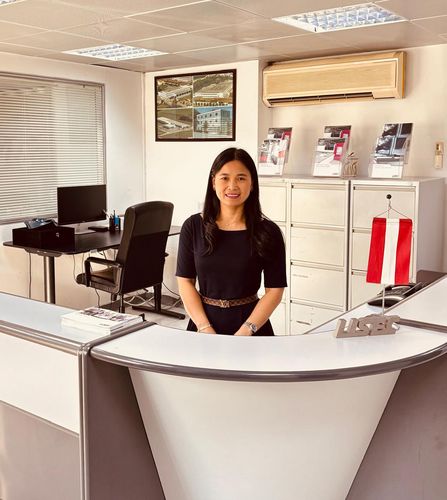
Regional responsibility with global significance
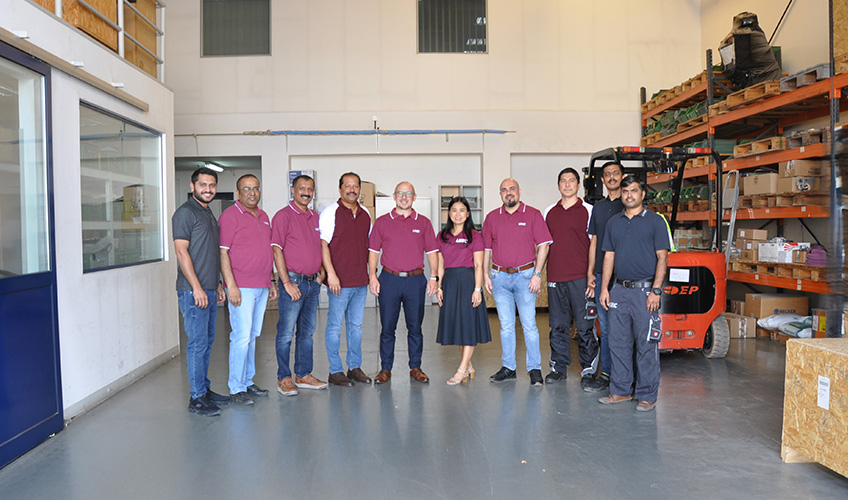
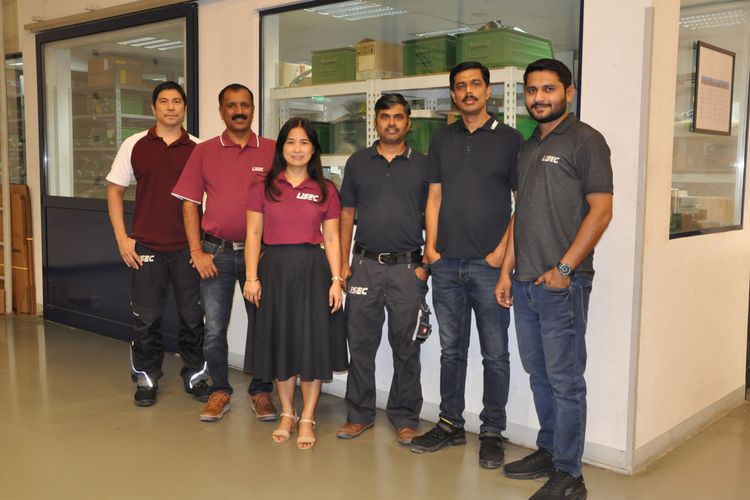
The HUB MEI serves a total of 23 countries - including markets of economic importance such as India, the United Arab Emirates, Saudi Arabia, Egypt and Turkey. The HUB is a central component of the global LiSEC strategy, with around a quarter of the world's population living in this region. The two branches - LiSEC Turkey (LTR) with four employees and LiSEC Middle East (LAE) with ten employees - collaborate closely with the aim of utilising synergies and thereby optimally serving market requirements.
Efficient cooperation and structure
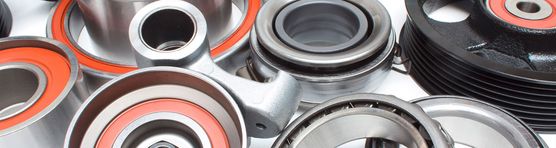
Cooperation between the two locations is clearly structured: While Turkey is chiefly in charge of operational tasks such as customs clearance and distribution of spare parts, centralised spare parts processing is now the responsibility of LAE. The management of both branches work in close coordination to take into account regional specifics and ensure efficient processes. The recently appointed addition of Aykut Erdem to the sales team underlines the focus on customer proximity and market expansion.
Vision 2030, customer structure and market potential
The HUB MEI is committed to an ambitious growth strategy until 2030 by expanding its sales and service team and increasing market penetration by making targeted product adjustments.
The HUB's customer portfolio also covers a wide range of sectors - from small businesses to large companies. High-end solutions such as those offered by LiSEC are in particularly high demand. The potential for such solutions in the emerging markets is still limited, but growing. LiSEC now also offers an attractive entry-level solution for these markets with LiTROS. For more information, see: www.litros.com/en
Trends and technologies
The region is currently experiencing a downright construction boom - especially in Dubai, Jeddah and Riyadh, which are seeing some of the most modern and sophisticated construction projects in the world. Large glass façades with special coatings are standard here where they are processed on LiSEC systems. A particularly strong trend can be observed at the moment with TPA spacers: Three LiSEC TPA systems have already been successfully sold within a very short space of time, with demand continuing to rise.
Challenges and cultural diversity
The size and diversity of the region also entails challenges:
- Geopolitical tensions can delay projects
- Cultural differences require a high degree of intercultural competence
- Decision-making processes are often slower and less predictable than is the case in Europe
Nevertheless, the opportunities are greater: The region is experiencing rapid growth, is innovative and open to new technologies.
"The HUB MEI is a key component of our global strategy. A clear focus on growth, regional adaptation and close cooperation means we are ideally positioned to fully exploit the potential of this region." - Johann Stöger, HUB Manager MEI
Outlook
LiSEC is once again showcasing its capability of adapting to international markets in a flexible and future-orientated manner with the HUB MEI. The combination of regional proximity, technological expertise and strategic foresight is what makes the HUB special. The coming years not only hold the promise of economic growth, but also a deepening of customer relationships and sustainable positioning.