











Software
Dynamic Optimisation
GPS.prod option for dynamic cutting optimisation
Dynamic Optimisation (GPS.dynopt) continuously improves existing cutting optimisations by automatically integrating subsequent optimisations, breakage sheets and fill-up sheets. This reduces remnant sheets, closes optimisation gaps and minimises wastage. The result is improved material utilisation, lower costs and more efficient production.
How is Dynamic Optimisation structured?
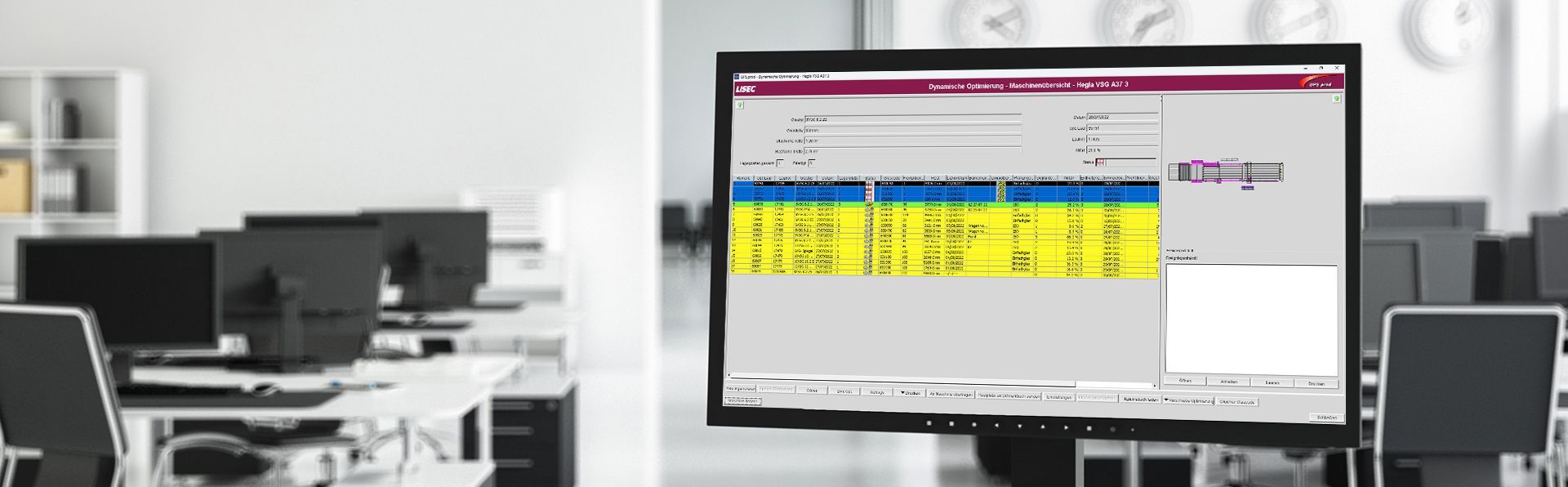
Dynamic Optimisation is designed as an extension to GPS.prod and operates directly within the production environment of the cutting systems. The system manages optimisation runs, monitors their status and continuously adapts existing cutting plans to the current production situation. A user-friendly interface allows optimisations to be viewed, prioritised and, where necessary, adjusted manually. The software is integrated into the material flow between optimisation, storage and the cutting table and communicates with the connected production systems.
How does the software work?
Dynamic Optimisation aims to come as close as possible to the ideal state of an "endless ribbon of glass" without remnant sheets. To achieve this, sheets from subsequent optimisations and breakage sheets are continuously integrated into existing optimisations. Freed-up areas are automatically filled, remnant sheets are avoided and optimisation gaps are closed. The cutting plans can be adjusted right up until shortly before the cutting table. Continuous optimisation steadily improves material utilisation while also reducing processing times.
Key functions:
- Avoidance of remnant sheets
- Automatic integration of breakage sheets
- Prioritised handling of breakage sheets
- Continuous optimisation
- Avoidance of optimisation gaps
- Automatic integration of fill-up sheets
- Adjustment of cutting plans right up until shortly before cutting
- Integration of remakes into existing optimisations
Who is Dynamic Optimisation suitable for?
Dynamic Optimisation is suitable for flat glass manufacturers seeking to maximise material utilisation and reduce wastage costs. Companies with high production volumes, frequent glass breakages, varying order structures or multiple cutting lines benefit in particular. The solution helps production managers, work preparation staff, optimisation specialists and machine operators respond flexibly to changes in production and achieve lasting improvements in the efficiency of glass cutting processes.
What advantages does the software offer?
Dynamic Optimisation increases the efficiency of glass cutting through continuous optimisation of active cutting plans. Breakage sheets, fill-up sheets and subsequent optimisations are integrated automatically, reducing remnant sheets and closing optimisation gaps. This results in better material utilisation, lower wastage costs and higher cutting productivity. At the same time, users benefit from shorter response times to production changes and more flexible production control. On average, wastage can be reduced by 1–2% and cutting time by 5–10%.
What functions are included as standard?
- Continuous optimisation of active cutting optimisations
- Avoidance of remnant sheets
- Automatic integration of breakage sheets
- Prioritised handling of breakage sheets
- Automatic integration of fill-up sheets
- Avoidance of optimisation gaps
- Changes to cutting plans right up until shortly before the cutting table
- Management and monitoring of optimisation runs
- Event and status monitoring via the user interface
Which optional functions can be added?
- Integration of remakes into existing optimisations
- Communication with GPS.autofab and connected cutting tables
- Multiple GPS.dynopt clients for additional cutting lines or cutting tables
The Highlights
Continuous real-time optimisation
Dynamic Optimisation continuously integrates sheets from subsequent optimisations, fill-up sheets and breakage sheets into existing cutting plans. This closes optimisation gaps and largely avoids remnant sheets. The result is continuously optimised material utilisation.
Automatic handling of breakage sheets
Breakage sheets are detected automatically, prioritised and integrated into existing optimisations. This allows remakes to be taken into account without extensive manual intervention, reducing production interruptions.
Maximum material utilisation
By dynamically adjusting cutting plans right up until immediately before the cutting table, the available raw glass is used to optimum effect. This results in less wastage, lower material costs and greater production efficiency.