











Individual Machines
APK-B
Fully automatic application device designed for the application of distancing cork pads
The LiSEC cork applicator enables fully automatic application of spacers in a defined grid. Even and compact distribution results in optimum support for glass lites sheets during transport. There is a flexible choice between two and seven application heads to meet individual requirements.
How is the APK-B configured?
The transport station of the APK-B is equipped with an applicator unit and is positioned in front of an automatic sealing machine or used for application of individual glass lites sheets. The back wall of the system is fitted with recessed, easily replaceable special castors that allow the glass sheets to be transported safely and effortlessly. Glass transport takes place on belts that are equipped with a particularly resistant coating.
The applicator heads are installed behind the glass transport track in the back wall of the system. If required, the LiSEC machine type APKF-A can also be used for application from the front side.
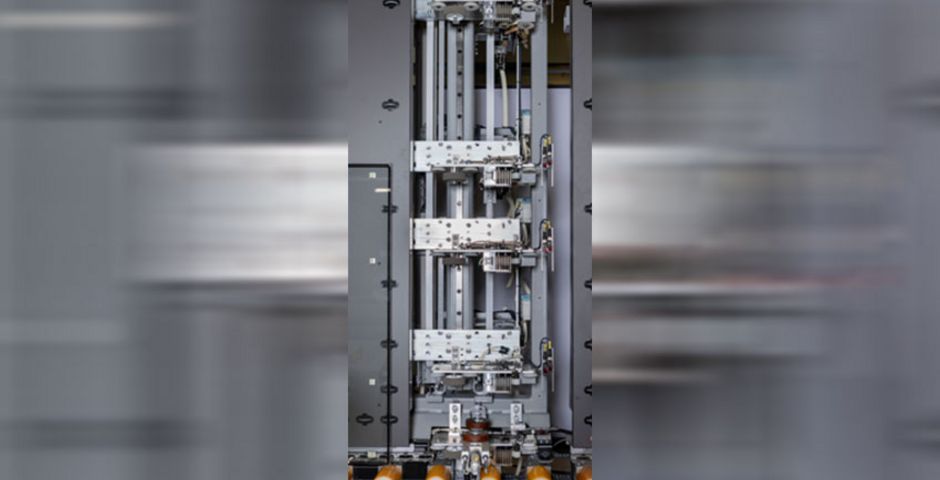
Between two and seven cork applicator heads can be selected, depending on the height of the glass sheets (see options). The fastening points are determined by a control system that arranges them one above the other and one behind the other according to the respective glass size. The applicator unit for the first or bottom row is stationary, while the applicator units for the second to seventh levels are brought into the required position via separately assigned guide rails and an electronically controlled drive unit.
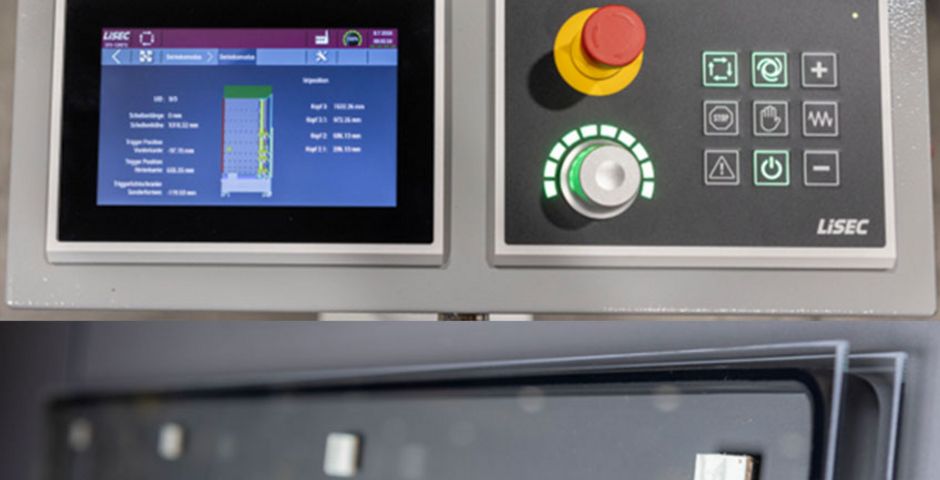
The uncoiling reels are positioned together with the applicator device on the rear side of the machine. An integrated sensor system for each applicator unit detects tearing or the end of a material reel and this is displayed on the visualisation.
How does the APK-B work?
The cork band moves through the application head and is trimmed to the required length by a cutting tool there. The cork is then stamped directly onto the passing glass sheet using the cutting device. The number of application points in the vertical arrangement is specified according to the glass sheet height in the process control program. The glass length and height are defined by an integrated measurement device or may be accepted via data records from a superior production control software system.
Who is the cork applicator suitable for?
The LiSEC APK-B is the ideal solution for glass processors of all sizes, enabling them to automatically apply cork pads to insulating glass units or individual glass lites sheets. These pads ensure that the glass units remain separated during storage. Thanks to its maintenance-friendly design and robust construction, the APK-B is a user-friendly and low-maintenance system.
The LiSEC cork applicator enables fully automatic application of spacers in a defined grid. Even and compact distribution results in optimum support for glass lites sheets during transport. There is a flexible choice between two and seven application heads to meet individual requirements.
How is the APK-B configured?
The transport station of the APK-B is equipped with an applicator unit and is positioned in front of an automatic sealing machine or used for application of individual glass lites sheets. The back wall of the system is fitted with recessed, easily replaceable special castors that allow the glass sheets to be transported safely and effortlessly. Glass transport takes place on belts that are equipped with a particularly resistant coating.
The applicator heads are installed behind the glass transport track in the back wall of the system. If required, the LiSEC machine type APKF-A can also be used for application from the front side.
Between two and seven cork applicator heads can be selected, depending on the height of the glass sheets (see options). The fastening points are determined by a control system that arranges them one above the other and one behind the other according to the respective glass size. The applicator unit for the first or bottom row is stationary, while the applicator units for the second to seventh levels are brought into the required position via separately assigned guide rails and an electronically controlled drive unit.
The uncoiling reels are positioned together with the applicator device on the rear side of the machine. An integrated sensor system for each applicator unit detects tearing or the end of a material reel and this is displayed on the visualisation.
How does the APK-B work?
The cork band moves through the application head and is trimmed to the required length by a cutting tool there. The cork is then stamped directly onto the passing glass sheet using the cutting device. The number of application points in the vertical arrangement is specified according to the glass sheet height in the process control program. The glass length and height are defined by an integrated measurement device or may be accepted via data records from a superior production control software system.
Who is the cork applicator suitable for?
The LiSEC APK-B is the ideal solution for glass processors of all sizes, enabling them to automatically apply cork pads to insulating glass units or individual glass lites sheets. These pads ensure that the glass units remain separated during storage. Thanks to its maintenance-friendly design and robust construction, the APK-B is a user-friendly and low-maintenance system.
- Precise and automatic pressing onto the glass sheet
- Application of the distancing cork pads from the rear side
- Pad positioning by means of an automatic program
- Up to seven rows of pads
- Optional application of shapes according to the LiSEC shape catalogue
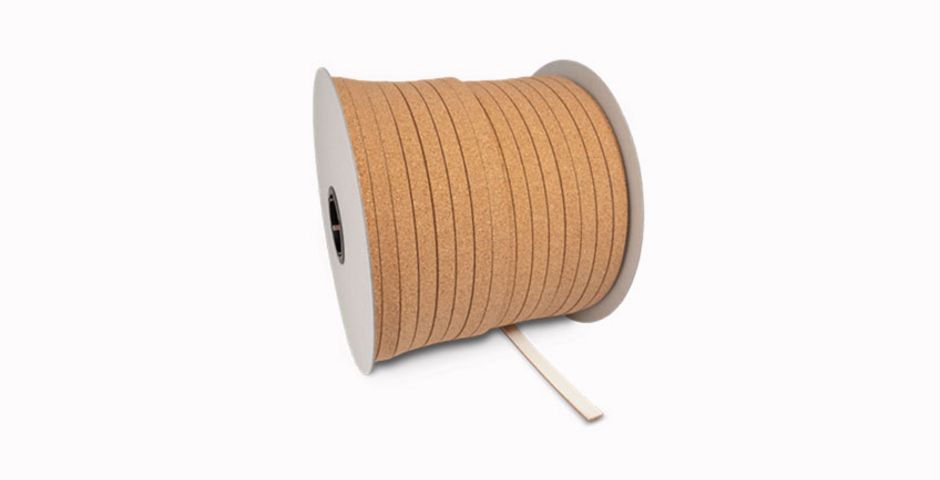
- Optional processing of cork reels with separating foil
The Highlights
Variable number of application heads
The number of application heads can be adjusted depending on the size of the glass sheet, in order to reliably apply the optimum number of pads for the respective sheet.
Processing of different cork bands
The APK-B can process different cork bands, optionally also designs with separating foil. Bands that have been tested and approved by LiSEC are stored in the approval list.
Application position via automatic program
The optimum position of the pads is automatically determined and applied by the program. Calculation of the positions can be adapted to individual requirements by means of adjustable parameters.