









Systems & Lines
ATH-A
Single- or double-sided glass loading station, stationary or mobile
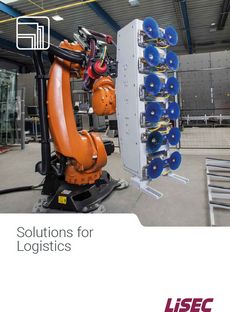
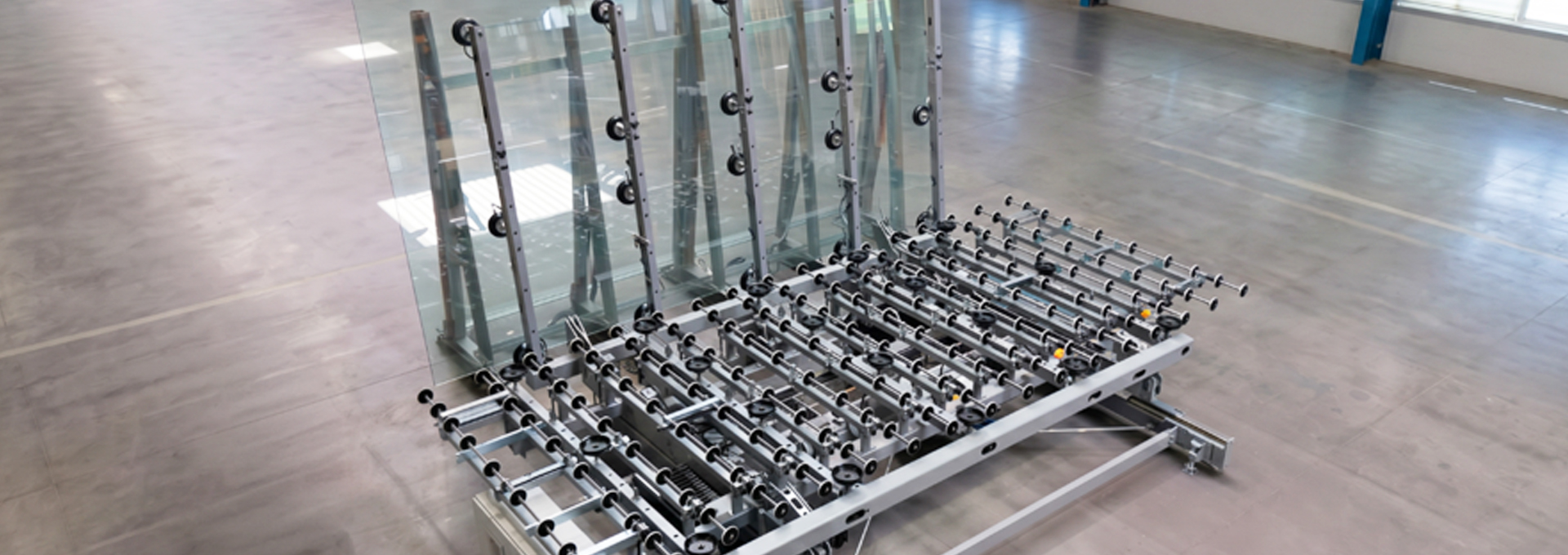
The ATH-A glass loading station enables fully automatic, demand-based loading of glass cutting lines directly from glass storage racks. The arrangement of the storage racks can be adapted flexibly to the existing storage structure. In the mobile version, the ATH-A can also travel automatically to and unload several glass storage racks arranged in parallel. The floor-mounted system features short cycle times and a compact design.
How does the LiSEC glass loading station work?
In fully automatic operation, the glass sheets are removed from the storage racks, positioned for cutting and then tilted into the horizontal position. The pivoting structure, including the vacuum suction frame, is operated by oil hydraulics or electrically. In the mobile version, up to ten storage racks can be integrated into the system.
Who is the ATH-A glass loading station suitable for?
The glass loading station is particularly suitable for companies with a low to medium range of glass types and demanding throughput and cycle-time requirements.
What advantages does the system offer?
The ATH-A glass loading station provides fully automatic loading of cutting lines and ensures efficient material flow in glass processing. Depending on requirements, loading can take place from one or both sides directly from glass storage racks. The suction frame is configured individually for the glass formats to be processed and ensures safe, precise handling. Thanks to its robust construction and high-performance design, the ATH-A is specifically designed for high throughput and short cycle times. It therefore supports economical and reliable production even under demanding manufacturing requirements.
- Fully automatic loading of cutting lines
- Single- or double-sided loading from glass storage racks
- Suction frame designed for the glass formats processed
- Designed for demanding throughput and cycle-time requirements
- Automatic glass removal from inloader racks
- Uninterrupted reloading through integrated reloading areas
The Highlights
Can be integrated into a glass storage system with LiSEC crane loading
Integration into a glass storage system with LiSEC crane loading combines the flexibility of crane loading with the high loading capacity of the ATH-A. Frequently required high runners are supplied via the ATH-A with the shortest possible cycle times.
Adaptable to different production requirements
The glass loading station can be configured as single- or double-sided and as stationary or mobile to meet individual requirements.